 Volcano Toba caused population bottleneck of modern humans and Neanderthals and destroyed all other human species, as well as destruction of almost the whole life in Southeast Asia. Volcano Explosivity Index of this volcano is 8, it occurs once per 10,000 years or more and the last eruption was more then 70,000 years ago.
Deccan Traps in India, with over 2 kilometers thick basalt layer on the area of 500.000 square kilometers (France i Spain have similar size), was made in volcano eruption. This volcano is rated with 10 on the Volcano Explosivity Index and occurs once per 1 million of year or more.
Siberian Traps initially had seven millions of square kilometers (Australia has the similar size). Siberian Traps are generated by volcano eruption and volume of it's lava was between one and four millions of cubic kilometers. Eruption frequency of this volcano is once per 10 millions of years or more and the last eruption occurred 251 millions of years ago. This volcano has Volcano Explosivity Index 11.
All of those information say to us that catastrophes caused by supervolcano eruption are more then possible. As time passes, chances for such eruption are bigger.
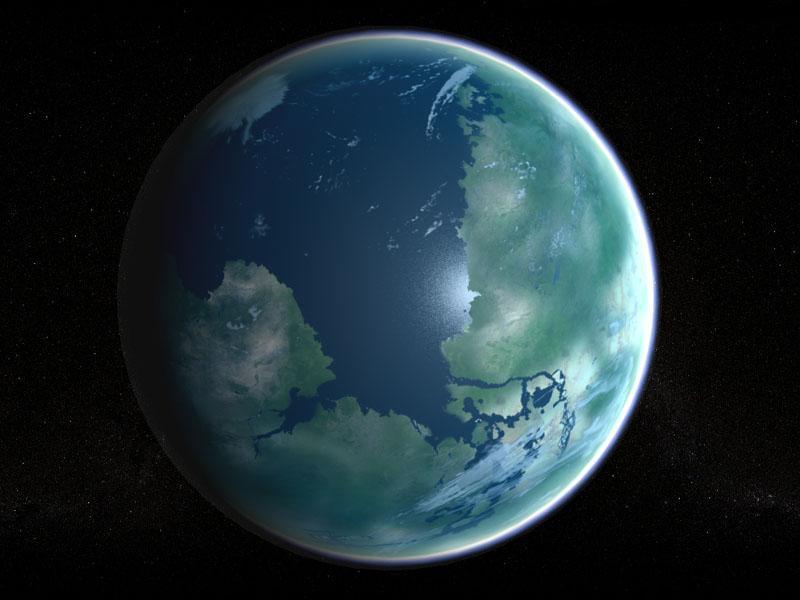 If such volcano eruption occurs, I don't think that we have other possibilities then to escape into the space. Actually, the only way to escape is to get warning enough time before the event. But, small or big group of humans which leaving the Earth is not able to survive without self-sufficient space colonies. If we want to have just a possibility that some humans survive, we will have to have space developed space colonies on Mars, Moon, Europa... According to the present situation, we need to wait at least 100 years for the first colonies out of the Earth. (At the up right side you may see terraformed Mars. Image is made by Mathew Crisp.)


